THE MUSIC
Many times we are asked
"How do you know what the music sounded like?"
and our answer is
"We know what the instruments sound like,
and there are images of the instruments being played
as far back as 100 B.c.,
but we don't know how the music was structured
or how it was assembled
e.g.,
modern day song form etc.,
i.e.,
there are no audio recordings of music
from Mesoamerica from the 16th century
nor are there audio recordings from any other culture
from the 16th century or from any other part of the world
that we can listen to
Notation of the rhythms or the melodies, in the western sense,
has yet to be re-discovered but there are a few examples of indigenous
rhythms notated in the CANTARES MEXICANOS, but they are written onomatopoeically.
Much the same way Hindustani and Carnatic compositions are documented,
A modern-day practitioner versed in the vernacular can play back what is
sung to them without any notation at all, but for those unaware of the vernacular of those traditions they would be unable to play it.
We should mention that 2 cultures that have notation of their music
that goes back 2,000 years are China and Japan and there are actual
melodies from India that were transcribed in Chinese notation when
Indian musicians visited China centuries ago
unlike the continents of
Africa
Asia
Europe
or
Australia
THE AMERICAS
lost 90% of their population due to genocide
some 80 to 130 million people
due to invasion, callousness, disease,
greed, and warfare
the numbers are staggering to comprehend
and genocide on that scale,
has never been repeated
and while many know what was taken
few know that we are still left with from
MESOAMERICA
530 MESOAMERICANCODICES from the 16th century
the largest codex
Historia general de las cosas de Nueva España
is 2,400 pages long
documented by Mexica tlacuilos and the
Franciscan priest Bernardino de Sahagun
unfortunately,
only 3 of the 530 codices are still in Mexico
(there are only 4 surviving Maya Codices)
the instruments
are alive and well and continue to be played daily
by practitioners throughout modern day Mesoamerica
and Mexico.
They are not gathering dust behind glass in a museum
somewhere
What other cultures have 2,000 year old instruments played
daily in their respective countries, and yet
none of the instruments are known in the world music paradigm
of instruments
Was in Australia for the AZTEC EXHIBIT in 2015 and
music was played by Mexican nationals living in Australia
We still have
the architecture
lintels
oral/aural history
pottery
the pyramids
(there are over 1000 pyramids in Mesoamerica and
approximately 100 in Eqypt that we are aware of
stelae
and foods from the Americas continue
permeate the worlds cuisine
e.g.,
cacao beans,
corn,
peppers,
pineapple,
squash,
tobacco,
tomato,
turkey,
thought
and ways of beingness
the INDIGENOUS WAYS CONTINUE
albeit
in a very different inflection
we continue to be surrounded by its
RESONANCIA
Many times we are asked
"How do you know what the music sounded like?"
and our answer is
"We know what the instruments sound like,
and there are images of the instruments being played
as far back as 100 B.c.,
but we don't know how the music was structured
or how it was assembled
e.g.,
modern day song form etc.,
i.e.,
there are no audio recordings of music
from Mesoamerica from the 16th century
nor are there audio recordings from any other culture
from the 16th century or from any other part of the world
that we can listen to
Notation of the rhythms or the melodies, in the western sense,
has yet to be re-discovered but there are a few examples of indigenous
rhythms notated in the CANTARES MEXICANOS, but they are written onomatopoeically.
Much the same way Hindustani and Carnatic compositions are documented,
A modern-day practitioner versed in the vernacular can play back what is
sung to them without any notation at all, but for those unaware of the vernacular of those traditions they would be unable to play it.
We should mention that 2 cultures that have notation of their music
that goes back 2,000 years are China and Japan and there are actual
melodies from India that were transcribed in Chinese notation when
Indian musicians visited China centuries ago
unlike the continents of
Africa
Asia
Europe
or
Australia
THE AMERICAS
lost 90% of their population due to genocide
some 80 to 130 million people
due to invasion, callousness, disease,
greed, and warfare
the numbers are staggering to comprehend
and genocide on that scale,
has never been repeated
and while many know what was taken
few know that we are still left with from
MESOAMERICA
530 MESOAMERICANCODICES from the 16th century
the largest codex
Historia general de las cosas de Nueva España
is 2,400 pages long
documented by Mexica tlacuilos and the
Franciscan priest Bernardino de Sahagun
unfortunately,
only 3 of the 530 codices are still in Mexico
(there are only 4 surviving Maya Codices)
the instruments
are alive and well and continue to be played daily
by practitioners throughout modern day Mesoamerica
and Mexico.
They are not gathering dust behind glass in a museum
somewhere
What other cultures have 2,000 year old instruments played
daily in their respective countries, and yet
none of the instruments are known in the world music paradigm
of instruments
Was in Australia for the AZTEC EXHIBIT in 2015 and
music was played by Mexican nationals living in Australia
We still have
the architecture
lintels
oral/aural history
pottery
the pyramids
(there are over 1000 pyramids in Mesoamerica and
approximately 100 in Eqypt that we are aware of
stelae
and foods from the Americas continue
permeate the worlds cuisine
e.g.,
cacao beans,
corn,
peppers,
pineapple,
squash,
tobacco,
tomato,
turkey,
thought
and ways of beingness
the INDIGENOUS WAYS CONTINUE
albeit
in a very different inflection
we continue to be surrounded by its
RESONANCIA
HEARING THROUGH EUROPEAN EARS
the attitude reflected below continues to ebb and flow with time
sometimes it leans very heavy one way = European/non indigenous
and
sometime it leans very heavy the other way = Indigenous/non European
but the beauty and resonance of the instruments,
their colour of sound
their reverberations
whether alone,
in conjunction with each other
or
with instruments of different cultures
continues to
CREATE A NEW RESONANCE
for audiences of all ethnicities and cultures in
concert halls across the world
establishing a new
MULTI CULTURAL MUSIC
for a new
MULTI CULTURAL WORLD
as every human being shares 9 months of
rhythmic training in their mothers womb
before their feet touch mother earth
every human being is
INDIGENOUS
to this planet
VIVA LA VIDA
WESTERN VIEW ON
INDIGENOUS INSTRUMENTS OF MESOAMERICA
|
“The music of the Aztecs was unworthy of so cultivated a people.
They were not acquainted with stringed instruments; those they used were confined to the “huehuetle”, the “teponastle,” trumpets, sea-shells, and flutes - generally made of terra-cotta, which produced shrill sounds.... the sound they produced can be imagined; it certainly lacked harmony Drums, flutes, even conch shells accompanied the hymns sung in the temples, which were chanted in a sing-song manner, in a rude, monotonous tune, fatiguing to European ears. But the Aztecs took so much pleasure in them that they frequently sang during entire days. In spite of this taste music is the only art that remained in infancy among them. Bad musicians, the Mexicans. On the other hand, were very skillful in the art of dancing, in which they exercised themselves under the direction of priests from childhood. Their dances, which were of great variety, had different names. They danced in circles, or arranged in files, between which a dancer executed fancy steps. The women often took part in this amusement. For this recreation the nobles put on their most costly clothes, and decked themselves with jewels of gold, of silver, or of feathers.” THE AZTECS Their History, Manners, and Customs FROM THE FRENCH OF LUCIEN BIART (Published 1887) |
“From the remaining exemplars of Aztec instruments preserved in the
National Museum of Mexico, we may infer that the music the people during the pre-Conquest era was as barbarous and harsh as were the ceremonies at which their music was heard…The conch shell, the Mixtecan tun, the teponaztli, the chicahuaztli, the sonaja, the Zapotec chirimia and the Yaqui tambor, are not instruments capable of producing either alone, or in conjunction with each other, a grateful harmony: nor can the sound of any of them induce a spiritual response that is in harmony with presently accepted standards of behavior “the music for these ceremonies must undoubtedly have been as lugubrious, incoherent, and macabre as the passions that inspired it" EL ARTE MUSICAL EN MEXICO Alba Herrera y Ogazon National Conservatory of Music Faculty Published under the official Direction in General de las Bellas Arte (Published 1917) |
the MUSICIANS of MEXICO
articulate MEXICANism thru
their music
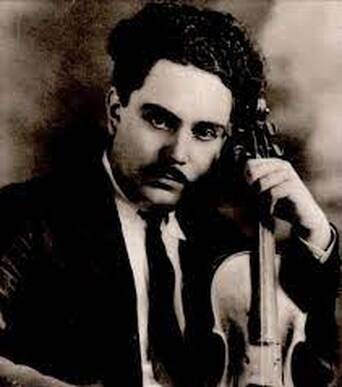
SILVESTRE REVUELTAS
DREAMING OF MUSIC and BANGING ON WASHTUBS SILVESTRE REVUELTAS (1899 - 1940) "I was young, three years old, she tells me, when I heard music for the first time the little village band playing its evening concert in the square. I stood listening for a long time and with what must have been spectacular concentration because it was so intense that my eyes crossed. And cross-eyed I remained for three or four days after. (Now, Unfortunately, musicians no longer leave me cross-eyed.) As a small boy, (and maybe as an adult) I always preferred banging on a washtub or dreaming up tales to doing something useful. And that is how I spent my time imitating instruments with my voice, improvising orchestras and songs to accompaniments on the washtub, one of those round galvanized tubs that I always preferred to drum on more than to bathe in. And I went on dreaming of music........... I continued studying music but was not very diligent. I began to love Bach and Beethoven at a very early stage. It gave me much pleasure to stroll Chapultepec Park romantic avenues, taking long strides, arms behind my back,long hair in disarray. Those lithographs and engravings of poor Beethoven, grim-faced, defying the storm had a strong influence over me. I could do no less myself. I have had many teachers. The best of them, with no degrees, knew more than the others. For that reason I have always had little respect for degrees. Now, after many years I still study, have teachers, write music, dream of distant countries and sometimes bang on washtubs................" written March 13, 1938: |
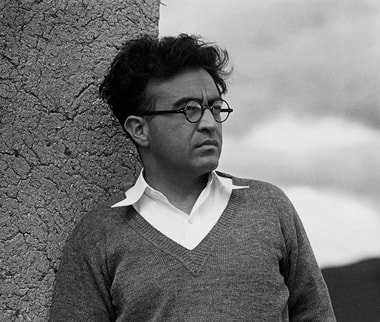
CARLOS CHAVEZ “Mexicans must now learn to "reconstruct musically the atmosphere of primitive purity" because "the musical culture of the aborigines constitutes the most important stage in the history of Mexican music." CARLOS CHAVEZ The indigenous music of Mexico is a reality of contemporary life. It is not, as might be thought, a relic to satisfy mere curiosity on the part of intellectuals, or to supply more or less important data for ethnography. The indigenous art of Mexico is, in our day, the only living manifestations of the race which makes up approximately four-fifths of the country's racial stock. The essential characteristics of this indigenous music have been able to resist four centuries of contact with European musical expressions. That is, while it is certain that contact with European art has produced in Mexico a mestizo (mixed) art in constant evolution, this has not meant the disappearance of pure indigenous art. This fact is an index to its strength. The force of indigenous art is rooted in a series of essential conditions. It obeys a natural creative impulse of the individual toward an expression at once legitimate and free of affectation. In musical terms, the great expressive strength of indigenous art is rooted in its intrinsic variety, in the freedom and amplitude of its modes, and scales, in the richness of its instrumental and sound elements, and in the simplicity and purity of its instrumental and sound elements, and in the simplicity and purity of its melodies. There is never, in this music, a morbid or degenerate feeling, never a negative attitude toward other men or nature as a whole. The music of America's immediate ancestors is the strong music of a man who constantly struggles and tries to dominate his surroundings. Imported manifestations opposed to the feeling of the music have been unable to destroy it because they have not succeeded in changing the ethical conditions of individuals. CARLOS CHAVEZ COMPOSER |
